==pla|\|ing lakes==










Friday, May 30, 2003
Online divorce sites boomingFor fees ranging from $50 to $300 -- a small fraction of what most lawyers charge even for an uncontested divorce -- couples are being provided with the appropriate forms and varying degrees of help completing them.
The phenomenon is spreading. Rival firms CompleteCase.com and LegalZoom.com each say they have served 20,000 clients nationwide in less than three years of operation. Hits on the divorce section of the California court system's do-it-yourself Web site soared from 6,800 in May 2002 to about 15,000 last month.
12:47 AM - [Link] - Comments ()
Thursday, May 29, 2003
Dutch cannabis cafes to be slammed by new passive smoke legislation protecting employees [News Room]
12:59 AM - [Link] - Comments ()
It seems calculated to turn the purist pale with horror
Plans afoot to turn The Lord of the Rings into a musical [News Room]
I don't think you need to be a purist to recoil from this one.
12:54 AM - [Link] - Comments ()
Wednesday, May 28, 2003
Hear hear
Steven Schnur on the bane of cellphonesFor a dozen years now I have resisted the blandishments of family and friends, refusing to equip my car with a cellphone or hang one from my belt, steadfastly maintaining that the best reason to leave the house is to escape its tyranny. Carrying one around seems as onerous as wearing a court-ordered collar, but then I've never been comfortable making calls - few of the men in my family are. My father used to sit beside a ringing phone insisting, "If you wait long enough, it stops." And it always did.I once liked phones, but since my 30s I've been less and less enamored of them. Cellphones sound more like a sentence than a convenience to me.
I feel victimized by its imperial summons, forced to interrupt work, to pause in mid-sentence, to rise from the dinner table, even, on occasion, to step from the shower, dripping with irritation; I feel entrapped by another's impulse, impelled to respond without benefit of adequate reflection or the eye contact so critical to understanding true intent.
Perhaps I'm alone in this, or perhaps, as others have suggested, it's genetic. It's not the caller that annoys me so much as the conditions of the conversation. I hear well enough, but discovered long ago that hearing alone is not sufficient for comprehension. In order to absorb the full import of another's words I need to be in their presence, to watch mouth and eyes, the tilt of the head, the tension in neck and shoulders. The spoken word is but one part of the total communication and I, for one, simply don't get the message without the other elements. So why compound this discomfort by exposing myself to it wherever I might be?
Whereas I find email a civil, calming form of communication, cells seem quite the opposite.
But then I don't talk much anyway.
3:29 AM - [Link] - Comments ()

Senegalese Sufi art at the Fowler in L.A.Through photomurals and video visits, Passport to Paradise will offer glimpses of the domes, towers, elaborated fa?ades, and labyrinthine layout of a building complex in Senegal that is made entirely of straw, reed, and sticks. The structures are aesthetically stunning. As first encountered by the curators in 1994 (and illustrated in the photographs to the right), straw, reeds, and sticks of yellow and red hues were bundled with baling wire and juxtaposed in harmonious patterns across walls rising to seemingly perfect domes of straw. Triangular and bar motifs marched across the walls. The compound is the inspired creation of a holy man (marabout) named Serigne Omar Sy, accomplished by a group of young men living a monastic life with him. Amadu Bamba has come to Serigne Sy in dreams, explaining that he should recognize and venerate the reed pen (qalam) with which one writes the Word of God. Sufi poetry bears many references to a writer's intimate relationship with the pen, for with diligence and devotion, one can become "a pen in the hand of God." Serigne Sy and his men have realized this sense through what can be justly called an architecture of the Word. The fretwork of triangles and other forms are holy "words," Serigne Sy says, in an arabesque that conveys the rhythms and intentions of writing. The layout of the 1994 compound was a geomantic device ("magic square") that concentrated healing energy toward its central chamber. As construction proceeded, repairs were needed for earlier portions, making the place a monument to Bamba's philosophy of never-ending work for the glory of God. Serigne Sy is a controversial man, however, and the compound has been burned to the ground twice by those opposed to his visionary practices. The place's vulnerability must be an important aspect of its message, and without entering such an unfortunate fray, visitors to Passport to Paradise can easily appreciate the spiritual and artistic achievements of this wondrous architecture of the Word. Most intellectually staggering of all is the fact that Serigne Sy and his followers live in a sacred text as literally as can be imagined. [link]
2:49 AM - [Link] - Comments ()
New book to be published next month reveals France refused Picasso citizenship on the grounds he was an "anarchist with Communist sympathies"
Now that's a nice trick -- being an anarchist and a Communist.
Not a bad painter either.
1:21 AM - [Link] - Comments ()
Big week for astronomy
On top of the reverse-shadow eclipse this coming Saturday, there were 2 X-3 class solar flares over the weekend (one of which generated a geo-storm which will hit soon), 2 comets got eaten by the sun and a sunspot the width of 6 Earths formed.
SpaceWeather has animation of the latter two events.
1:04 AM - [Link] - Comments ()
Tuesday, May 27, 2003
Canada's schizoid attitude toward pot
At least among politicians.
2:45 AM - [Link] - Comments ()
Monday, May 26, 2003
Christian tithing down 62a> in the last year [Undernews]
9:08 PM - [Link] - Comments ()
Despite the rise of Hindu fundamentalism and laws providing up to a 5 year sentence for adultery, sex and sensuality are making a big comeback in India
Economic good times and email -- and a new assertiveness by women -- have something to do with it.The real source of the massive urge for sexual exploration that Indians, particularly women, have developed suddenly is as mysterious as the reasons for the rise and all of civilizations. But one thing has come out clearly in the survey. New technology is an important factor encouraging the phenomenon. Internet and mushrooming cyber cafes have helped, as have mobile phones and SMS (short message service) facilities. Women and men have suddenly heard from old flames, childhood friends, former classmates, whom they may have fancied once, dates have been fixed, and one thing has led to another. In most cases straight, unembarrassed initiatives have come from women, as men twiddled their fingers thinking of creative ways of broaching the subject.
Wife swapping, relatively unknown in India until recently, has made an appearance. Adventurous couples are advertising in newspapers their desire to meet like-minded people for wife and husband swapping.
11:39 AM - [Link] - Comments ()
Sunday, May 25, 2003
Good little interview with David Thomson (see The New Biographical Dictionary of Film link in left column)Pop Matters: What is the value, to you, and to a culture, of literacy?
David Thomson: I think it's just vital. I think it's a scandal that, 100 years after the dawn of film and at a time when we know statistically how much time children spend watching moving imagery, that the educational system doesn't take on filmic literacy. For instance, classes could ask what is a cut and what does it do, as they ask what is a sentence and what does it do. Yes, literacy has declined. And you've got children who are terribly vulnerable to what they see on the screen. I think the school should spend much more time examining how we think we know. How do we think we understand? I think those are huge issues.
I'm very interested in film as an influence on behavior, in how films affect the way people regard love and truth and violence. It's something I've been trying to explore for a long time: the degree to which films have been making a dream landscape for all of us. The degree to which many people walk around today in life as if they half hope they're being photographed. Everyone is a little bit of an actor nowadays. The people as a whole have turned into ghosts that are imitating people in films. Nobody in this country has any politics anymore, and I think it's connected. We've given up the responsibility of being ourselves. Generally, I think film is much too complicated to be just worshipped. I find that very disturbing.
3:24 AM - [Link] - Comments ()
ex-lion tamer on art (particularly 70s punk & co.) and edgesexmalcolm mclaren, svengali to the sex pistols, operated a bondage wear shop in london called sex, one of the first storefronts to offer latex wear by the light of day instead of by brown paper mailorder, and what's more to offer it as a replacement for/radical statement on high fashion. this was the environment in which the pistols were germinated.
similarly, the new york dolls, arguably the catalysts for late 70's new york punk, were as much a part of the drag performance scene as they were rock musicians. wendy o. williams of the plasmatics was an actress in porn films and made that aesthetic an integral part of her work. lydia lunch, the san francisco punk prophetess, shock performance artist and goth queen, destroyed the boundary between north beach smut purveyor and high-theater mainstay. throbbing gristle was born out of some very dodgy performance art bordering on live action pornography. many punk musicians who later became famous made their skag money as twinks for high society perverts.
3:11 AM - [Link] - Comments ()
Saturday, May 24, 2003
Next Saturday's solar eclipse
Because of the moon's irregular orbit and it's unusual shadow path this time, the moon will (for those in the UK and nearby) appear a smaller disc outlined by the sun -- and the shadow's movement will be the reverse of its usual west-to-east direction
5:10 PM - [Link] - Comments ()
Happy News for once
Oakland Public Library has received half the books it requested on their amazon list
Some other libraries have been equally blessed with donations.
4:48 PM - [Link] - Comments ()
Joe Connelly's Crumbtown: reviewWhen Don is sprung, he comes home to a seemingly healthier, higher-rent Crumbtown. New storefronts. Freshly painted barber poles. But this isn't a case of another Massachusetts Miracle. Instead, in Don's absence, Crumbtown's sheer seediness has made it the location of choice for television cop shows searching for that gritty edge. The entire town has been handed over to actors and producers, including desperate Hollywood director Rob Landetta. Rob's high concept is to adapt Don's criminal career to the small screen, altering small parts of his history (meaning everything) in order to transform Don into a modern-day Robin Hood. Rob's producer isn't quite on board. It's a crime show without cops, he complains. "Crumbtown is post law enforcement, post Bill of Rights," Rob pitches.Pop Matters seems like a good culture zine.
11:06 AM - [Link] - Comments ()
Who needs Photoshop?
New 8.0 version of Paint Shop Pro sounds like a very good deal for less than $100
Consumer review: "If any program should be bundled with every digital camera sold this is the one."
11:02 AM - [Link] - Comments ()
Awe for the Tiger, Love for the Lamb: A Chronicle of Sensibility to Animals: review
A history of pieces on compassion toward animals, though "it is largely a history of obduracy, casual cruelty, and sadism."
Did you know Descartes performed experimnets on dogs, a la Bill Frist?
Apparently there was a revolution in attitudes towards animal cruelty in 19th century England.
10:51 AM - [Link] - Comments ()
CBC Radio One interview with Barbara Gowdy (The Romantic, in RealAudio, 21 mins., see February 14 entry)
There are a number of interviews with various people, apparently between 5 and 30 minutes long. Among them: William Gibson, Ian McKellan, Inuit throat singer Tanya Tagaq Gillis, and Leida Finlayson, who's been collecting stories of children of hippie parents and was recently diagnosed with terminal cancer and is looking for help from potential interviewees to finish the book.
10:39 AM - [Link] - Comments ()
Composer Kenneth Kirschner's field recordings etc. made during antiwar marches/demos in NYC this spring
2:19 AM - [Link] - Comments ()
Thursday, May 22, 2003
The massive November quake in Alaska was actually a complex of 3 quakes, and its focussed directionality caused the effects to be felt for thousands of milesThe Denali fault earthquake was very directional ? it took only about 100 seconds to tear 210 miles of faults from west to east. New seismographs that faithfully record large earthquakes, GPS surveys, and surface measurements of offset features, show that the earthquake produced tearing along different faults, and it did not evenly release energy. In effect, the event was a composite of three smaller earthquakes: a M 7.2 earthquake on the previously unknown Susitna Glacier fault, two major pulses of slip (magnitudes 7.3 and 7.8) on the Denali fault, and finally a smaller amount of slip on the Totschunda fault. The largest side-to-side offset was about 29 feet.
[...]
As a result, said USGS scientist Peter Haeussler, one of the lead authors on the report, the earthquake effects were most pronounced in one direction -- southeast of the fault trace toward western Canada and the lower 48 states. Consequently, the Denali fault earthquake was felt as far away as Louisiana. The earthquake also disturbed the level of water wells in Pennsylvania by up to 2 feet, damaged houseboats in Seattle from sloshing seismic sea waves, and triggered small earthquakes at many volcanic or geothermal areas in the direction of rupture. The most pronounced triggering occurred at Yellowstone, Wyoming, with 130 small earthquakes in the 4 hours following the 1,940-miles away Alaskan rupture. In the other direction by contrast, only one of the many active Alaskan volcanoes had triggered earthquakes.
1:21 AM - [Link] - Comments ()
Tuesday, May 20, 2003
Spammers hijack unprotected computersAs spam has proliferated and with it the attempts by big Internet providers to block messages sent from the addresses of known spammers many mass e-mailers have become more clever in avoiding the blockades by aggressively bouncing messages off the computers of unaware third parties.
In the last two years, more than 200,000 computers worldwide have been hijacked without the owners' knowledge and are currently being used to forward spam, according to AOL and other Internet service providers. And each day thousands of additional PC's are compromised at companies, institutions and most commonly of all homes with high-speed Internet connections shared by two or more computers.
[...]
...the rapid rise in the number of spammers trying to hijack innocent computers is a direct result of their desire to hide their own Internet protocol addresses from spam blockers. Most commonly, they are taking advantage of a backdoor in much of the software that office users or people with high-speed connections at home often install to share an Internet link among several computers or so-called proxy servers. Some other types of e-mail and Web surfing software, typically run by larger companies, can also be taken advantage of if security features are not properly set up.
10:31 AM - [Link] - Comments ()
Monday, May 19, 2003
Civilization dating back 2700 years discovered in NicaraguaThere are monuments, petroglyphs (rock paintings) and pottery, and most remarkably, an area where many huge columns were formed out of rock - columns which may have been used at burial sites.
[...]
Independent experts say this shows that the process that led to the founding of the Mayan cities, such as Tikal, Palenque, or Copan (in Guatemala, Mexico, and Honduras respectively) covered a much larger geographical region than archaeologists have supposed up to now.
10:59 AM - [Link] - Comments ()
"Every time Mr Bondarenko conceives a new painting, he faces the tough choice between a chance to express himself and an urge to buy a beer"
Ukrainian artist's chosen medium is money -- he paints on currency
1:29 AM - [Link] - Comments ()
Sunday, May 18, 2003
With young Spaniards living in close quarters with their families longer than they used to, a Green Party legilator in the small town of Grenada has proposed a (undoubtedly quixotic) 50otel discount for teens' sexual trysts, outraging their elders [Undernews]
3:32 PM - [Link] - Comments ()
Warm review of Peter Biskind's compulsively readable, informed and dish-y Easy Riders, Raging Bulls: How the Sex-Drugs-And-Rock-N-Roll Generation Saved Hollywood (which came out in 1999)The documentation of bad behavior is thorough and tireless. Martin Scorsese was so coked out one night that he chased after his girlfriend, completely naked, down Mulholland Drive. Paul Schrader, screenwriter of Taxi Driver and director of Blue Collar, slept with a loaded Smith & Wesson .38 on his bedside table and had a tendency to wave it around when he spoke, "to make a point." Chinatown producer Robert Evans became so paranoid from drug abuse that he refused to leave his home and conducted production meetings for Paramount from his bed.
As the likes of Francis Coppola, Hal Ashby, and Robert Altman fashioned themselves after the auteur theory propogated by the French critics of Cahiers du Cinema, they came to believe their own press and take themselves too seriously. They weren't mere "movie directors," they were auteurs, generals, gods. Both Coppola and William Friedkin followed blockbuster hits (The Godfather and its sequel for Coppola, The French Connection and The Exorcist for Friedkin) with ambitious films whose productions resembled small-scale wars. Coppola's Apocalypse Now was moderately successful and received mixed reviews but has since become a classic. Friedkin's Sorcerer was a bomb in every respect and signaled the downfall of his career; he's now a for-hire director on action fare like The Hunted.
2:51 PM - [Link] - Comments ()
James McManus' Positively Fifth Street: Murderers, Cheetahs, and Binion's World Series of Poker: reviewI found the author's writing about the tournament heart-stoppingly dramatic, as brilliant as anything ever written about poker. And while his coverage of the Binion trial feels less compelling, less fought-for, Positively Fifth Street, like Sin City itself, is an endlessly fascinating spectacle.
2:21 PM - [Link] - Comments ()
Wolfgang Wagener's Raphael Soriano: reviewBy the mid-1940s a number of the city's most distinguished architects -- including Soriano, Richard Neutra, Charles and Ray Eames, Eero Saarinen, and Soriano's prot?g?s Pierre Koenig and Craig Ellwood -- recognized that the techniques and materials of the war industries, especially the aeronautical industry, could be used to design and build a new type of affordable and beautiful house for southern California's swelling population. They were enlisted in the Case Study House program (1945-1966), which aimed to build avant-garde Modernist family homes on a bourgeois budget. Marked by a fluidity of indoor and outdoor space (the Case Study architects, Soriano in particular, were adept at interweaving rooms and patios), and built largely of glass framed in lightweight steel, these clean-lined houses also managed (unlike Philip Johnson's and Mies van der Rohe's soulless domestic glass boxes back east) to be jaunty, relaxed, and remarkably livable. Soriano's work was the apotheosis of the Case Study House ideals. Like his mentors Rudolf Schindler and Neutra, Soriano molded the understated, pure Modernist aesthetic to the climate and good life of southern California. But he was equally attentive to cost and to the need for easy and fast construction, and was hence imaginative and innovative in his frequent use of prefabricated, industrial, and off-the-shelf materials. This book places Soriano's designs in the cultural, political, and economic context of postwar southern California, and it keenly assesses both his breezy, family-friendly houses and his contribution to the Case Study movement (his pioneering use of steel module frames eliminated the need for interior, load-bearing walls and resulted in the open floor plans that became a distinguishing feature of the program's houses).
2:12 PM - [Link] - Comments ()
Clever RIAA plan to threaten file sharers with suit-threatening letters backfiresOn Monday, as first reported by CNET News.com , the RIAA withdrew a DMCA notice to Penn State University's astronomy and astrophysics department. Sent during Penn State's final exams, it prompted the central computing office at the campus to threaten the department with having its Internet connection severed unless the infringing material was removed.
The problem, however, was that no infringing file existed on the department's computer. The RIAA's automated program apparently confused two separate pieces of information--a legal MP3 and a directory named "usher"--and concluded there was an illegal copy of a song by the musician Usher.
In a second incident, Speakeasy, a national broadband provider, said Tuesday that the RIAA had apologized for sending it a cease-and-desist letter alleging illegal activity on a subscriber's FTP site devoted to the Commodore Amiga computer. The RIAA's form letter sent to Speakeasy last Thursday alleged the Amigascne.org site illegally "offers approximately 0 sound files for download. Many of these files contain recordings owned by our member companies, including songs by such artists as Creed."
1:05 PM - [Link] - Comments ()
Dutch architect Rem Koolhaas on the rise and fall of New York City [orlin grabbe]New Yorkers surrender to empathy. The tragedy of 9/11 inspires a mood of collective tenderness that is almost exhilarating, almost a relief: Hype's spell has been broken and the city can recover its own reality principle, emerge with new thinking from the unthinkable. But politics interfere. In spite of Bloomberg's pragmatic sobriety, the transnational metropolis is enlisted in a national crusade. New York becomes a city (re)captured by Washington. Through the alchemy of 9/11, the authoritarian morphs imperceptibly into the totalitarian. A competition for rebuilding Ground Zero is held, not to restore the city's vitality or shift its center of gravity, but to create a monument at a scale that monuments have never existed (except under Stalin)."sublime"?
On March 17, at 9:30 am, the winning architect rings the bell of the New York Stock Exchange. At 8 pm, the president issues his ultimatum to Saddam, the "displaced" author of the WTC disappearance. At midnight on March 20, the war starts. At 8 am, at a breakfast meeting in lower Manhattan, the "Master Design Architect," an immigrant, movingly recounts his first encounter with liberty.
Instead of the two towers - the sublime - the city will live with five towers, wounded by a single scything movement of the architect, surrounding two black holes. New York will be marked by a massive representation of hurt that projects only the overbearing self-pity of the powerful. Instead of the confident beginning of the next chapter, it captures the stumped fundamentalism of the superpower. Call it closure.
3:59 AM - [Link] - Comments ()
"Saturday Morning cartoons" now history [Undernews]Six key factors have led to children watching less Saturday morning cartoons: more recreational sports, the introduction of cable and satellite TV, the Internet and video games, a poorer quality of animation, and a greater emphasis on family time. These factors are rather self-explanatory with the exception of the latter: the divorce rate of Americans now stands at 49 percent, and time on the weekends has become more precious for children as many commute between parents' houses. For parents who only have limited access to their children due to either divorce or career advancement, plopping them down in front of the television for five hours on a Saturday morning is no longer a viable option.
[...]
A child who never knew the phenomenon of Saturday morning cartoons sees no reason to watch cartoons on Saturday mornings rather than on Wednesday nights or Sunday afternoons. Nevertheless, according to some studies, when a child sees the color orange, the first word the child associates with that color is "Nickelodeon." Today's children are being raised as brand loyal to Nickelodeon and Cartoon Network's signature checkerboard. These brand loyalties form as early as two years of age.
3:01 AM - [Link] - Comments ()
Thursday, May 15, 2003
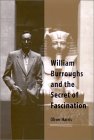
Oliver Harris' new study William Burroughs and the Secret of Fascination looks like worthy reading for WSB fans
Harris edited Burroughs' (first volume of?) letters from the 50s, mostly to Ginsberg. It is an essential read, and the basis for the new study.
They're remarkable.
10:46 PM - [Link] - Comments ()
Wednesday, May 14, 2003
Peace Not War comp
Music for a good cause, the Center for Cooperative ResearchCD 1
Ani DiFranco
Sleater-Kinney
Public Enemy
Billy Bragg
Midnight Oil
Chumbawamba
DJ DisOrientalist
Asian Dub Foundation
-with Tariq Ali
Life
Seize the Day
Crass
Change
The Unpeople
- with John Pilger
Slovo
Yo La Tengo
CD 2
Ms Dynamite
Roots Manuva
Alabama 3
The Mark of Cain
John Lester
GM Babyz
Torben & Joe
- with Ken Livingstone
Nitin Sawhney
Funmental
SuparNovar
Laszlo Beckett
Pok & the Spacegoats
Stephan Smith
- with Pete Seeger & DJ Spooky
Saul Williams - with Coldcut
Sia
Massive Attack
Bindi Blacher
3:07 AM - [Link] - Comments ()
Sunday, May 11, 2003
On the new SciFi Channel reality show Mad Mad House "five people with different alternative lifestyles rule the roost, and try to entice 'Joe Normal' contestants to their way of living!"This show puts contestants into Alt Manor, a house inhabited by a vampire, a witch, a voodoo priest, a yoga master and a psychic, where the contestants must compete in a series of increasingly bizarre challenges to claim a grand prize.Here's the download link for the application to be one of the "Alts".
12:00 PM - [Link] - Comments ()
File sharers tweak spyware to block RIAA surveillance and spot bad files
11:41 AM - [Link] - Comments ()
Nice music site
"le webzine des courants dark : metal, gothique, death, black, heavy, batcave, electro, indus, ambient"
"batcave"?
2:42 AM - [Link] - Comments ()
Remember Tripping Daisy? That might not prepare you for The Polyphonic SpreeThree parts Sgt. Pepper's Lonely Hearts Club Band, two parts Jesus Christ Superstar, and 100 percent utterly unique, The Polyphonic Spree is the very big little Dallas band that could.Not my cuppa, as they say in England, but equal parts interesting and disturbing.
As Spree shows commence, a joyful Tim DeLaughter dramatically leads his 20-some bandmates - all wearing flowing white robes - from the back of the darkened club toward the stage. Exuberant fans - many wearing fuzzy red hats - part like the Red Sea to accommodate them.
In addition to your typical rock components - vocalist, electric bass, guitar, and drums - the Spree features instruments that don't usually get a workout outside of an orchestra pit. Trumpet, trombone, flugelhorn, and harp share the stage with a choir of nine singers who bounce joyfully on risers, belting out backup vocals for Mr. DeLaughter. [link]
1:37 AM - [Link] - Comments ()
A student-compiled course in L.A. Lit [Christian Science Monitor]Brown is the only public defender that provides the free defense for the people that cannot afford such deals. Such is the case with Robert Fernandez, a young teenage boy whom Brown along with the Fernandez family and the Chicano community believed was murdered by the "pigs" inside the jail cells. His murder was said to be an "accidental suicide" but certain facts point the other way. Afraid of police brutality, the only inmate that was close to Robert's cell would not come out with the truth. Furthermore, unable to provide sufficient evidentiary support, the trial is dismissed and the "pigs" are found innocent. Fernandez' body, even with all the bruises attained from the "accidental suicide", could not be enough to prove that it was police brutality that killed him. That, along with the religious injustice and exclusion from the church, was the driving force for Brown's retaliation and passion to serve and redeem. [on The Revolt of the Cockroach People by Oscar Zeta Acosta]
"There's some principle I'm not grasping, Maria," Carter said on the telephone from New York. "You've got a $1500-a-month house sitting empty in Beverly Hills, and you're living in a furnished apartment on Fountain Avenue. You want to be closer to Schwab's? Is that it?" [from Joan Didion's Play It As It Lays, in the L.A. geography section of the Didion subsite]
As the story progresses, Francie and the people around her must fight harder to survive in the apocalyptic future of Los Angeles. They all know that nothing can be wasted, from food to water to gas; trading and buying of these scarcities are ways that Francie and her friends obtain those necessities.? Even with all that Francie faces, she still cannot find herself ever leaving Los Angeles because it is her home and the only place she will consider her home. [from the summary of In the Heart of the Valley of Love by Cynthia Kadohara, which takes place in 2052]
1:12 AM - [Link] - Comments ()
Saturday, May 10, 2003
25
This is a blog with short, well-written and informed reviews of the electronic/sound design stuff I listen to a lot -- mostly as I surf
Highly recommended.
I'll be posting some more on e-music sites soon.
Meanwhile try some of Kenneth Kirschner's sound design/piano work.
I've been listening a lot to post piano, his collaboration with Taylor Deupree, which came out last year.
1:34 AM - [Link] - Comments ()
Pro Tools software heralds the end of the recording studio as we've known it [Undernews]In just a few years, the commercial recording studio has become an endangered species. Between a troubled record industry and new technology that makes studios and their expensive equipment all but obsolete, only a handful are still able to stay in business. With the extraordinary capabilities of the digital recording system called Pro Tools and the rapidly dropping cost of hard disk storage and blank CDs, musicians can set up their own recording studios for a fraction of what it used to cost to make albums at commercial facilities.But something's lost as something's gained, as Joni Mitchell once wrote:While studios everywhere scramble to accommodate this new world, Pro Tools, a software program that makes the previously impossible possible, has fundamentally changed the way music is made. Entire careers have been credited,Eventually, only the wealthiest musicians will be able to afford studios where musicians play together live, which will be a special event which people treasure.
for instance, to just the auto tune option of Pro Tools -- (read: Jennifer Lopez, Lisa Marie Presley) which electronically puts off-key vocal performances in tune. Musicians playing together live in the studio are rapidly becoming a thing of the past, as with the Santana record.
"It's all data manipulation now," said Fantasy's Bombardier. "Where is the striving for excellence? The take after take of reaching into the depths for a performance? Now they don't have to do that. The machines make the less talented people sound almost as good as the talented."
12:38 AM - [Link] - Comments ()
Friday, May 09, 2003
A Tour of Cold War BaltimoreMount Weather -- This 43-year-old big daddy of bunkers near Berryville, Va., might have remained a secret if it weren't for a pesky jetliner that crashed nearby in 1974, effectively blowing its cover. It's a vast underground affair, complete with streets, multistory buildings, and a lake large enough for water skiing. A host of governmental higher-ups have sleeping quarters here, including Supreme Court justices. The Federal Emergency Management Agency runs a multitude of disaster-response operations from under the mountain today.
2:08 AM - [Link] - Comments ()
Thursday, May 08, 2003
Elvis lives!
Indonesian pop phenom Inul rocks the casbah with her "drill"To her legions of ardent supporters, drilling is a funky, somewhat erotic dance style. To the Indonesian Council of Ulemas, one of the ruling bodies of Indonesian Muslim clerics, it is a debased display of pornographic lasciviousness that should never be performed in public.More here.
Basically, it involves rotating the hips in increasingly energetic circles while steadily bringing in the rest of the limbs until one's body has become a flurry of moving appendages. With her flowing black locks and usually clad in a brightly-coloured sequined outfit, Inul has created, or rather become, a new art form.
The articulate star first courted controversy in February when the Ulemas council issued an edict against her, accusing her of besmirching the nation's morals and performing pornography.
11:56 AM - [Link] - Comments ()
It's easy to forget how small the Earth really is, in times like these
See this photo of Mercury (upper right dot) against the sun yesterday?
Earth is 3 times bigger than Mercury.
3:05 AM - [Link] - Comments ()

Wednesday, May 07, 2003
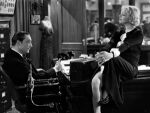
TCM's Complicated Women festival this month is what they do best
The introductory documentary was on tonight and it's pretty good. The series runs Tuesdays and focuses on pre-Code films 1930-34, the newly liberated female characters in movies and the brief period of sophistication and de-stereotyping of women's roles before the Code Hammer came down thanks to the Catholics.
Dated though the plots etc. are, these films show women having fun (who has really joyful fun in movies -- or in real life -- anymore?), wearing next to nothing, having casual sex or being prostitutes (offscreen) and doing "men's work" -- and not getting punished for any of it.
A number of them haven't even been on TCM, that I've noticed, anyway.
I recommend 2 that were on tonight that they aren't repeating right away: The Divorcee (for which Norma Shearer won an Oscar; I think she's pretty sexy in a number of films, and acted very well in The Women, which came out late in the 30s) and Design for Living which I've never seen on cable before and which is one of Lubitsch's -- and Miriam Hopkins' -- best.
Design also stars Fredreic March and Gary Cooper (neither of whom are particularly well-cast) as artist/bohemians that Hopkins falls in love with and with whom she forms an uneasy menage à trois. It works well enough anyway in Lubitsch's magical hands, IMO. It's a re-tooled a Noel Coward play.
Old favorites like Shanghai Express (Marlene Dietrich), Red Dust (Jean Harlow) and She Done Him Wrong (Mae West) are included, as well as lesser-known essentials like Baby Face (Barbara Stanwyck) and Downstairs (Virginia Bruce) are on the list too.
The doc is on again on the 20th and it's worth a look. It's based on a book by Mick Lasalle.
Also check out Mark Vieira's Sin in Soft Focus: Pre-Code Hollywood (for the pics) and Tom Doherty's Pre-Code Hollywood (for the politics).
3:14 AM - [Link] - Comments ()
Stephen Glass writes a novel about his true experiences making up stories for the New Republic [drudge]Mr. Glass has written a first-person account of an ambitious young journalist who slips from truth into reckless fraud, even concocting bogus notes and voice-mail messages to deceive editors and fact checkers. "When the first few fabricated stories were done and fact-checked and the articles were turned in, my editors loved them; more than that, they loved me ? I felt it," Mr. Glass writes.I remember the stink about this.
But the novel centers on the young journalist's unmasking and disgrace rather than on his editors' hunger for vivid, behind-the-scene details.
Mr. Glass, then 25, was a creative and prolific fraud. His many extraordinary inventions for The New Republic included articles about a Church of George Herbert Walker Bush, a bond-trading firm with a shrine to Alan Greenspan, and a conservative political conference rife with marijuana, beer and sex.
He seems like a character out of a fable, perhaps by Twain.
1:53 AM - [Link] - Comments ()
Tuesday, May 06, 2003
Lyric epiphanySURF'S UPSomehow this song sums up the Bubble and the Burst, ThemePark America pre-9/11 and after.
A diamond necklace played the pawn
Hand in hand some drummed along, oh
To a handsome man and baton
A blind class aristocracy
Back through the opera glass you see
The pit and the pendulum drawn
Columnated ruins domino
Canvass the town and brush the backdrop
Are you sleeping?
Hung velvet overtaken me
Dim chandelier awaken me
To a song dissolved in the dawn
The music hall a costly bow
The music all is lost for now
To a muted trumperter swan
Columnated ruins domino
Canvass the town and brush the backdrop
Are you sleeping, Brother John?
Dove nested towers the hour was
Strike the street quicksilver moon
Carriage across the fog
Two-Step to lamp lights cellar tune
The laughs come hard in Auld Lang Syne
The glass was raised, the fired rose
The fullness of the wine, the dim last toasting
While at port adieu or die
A choke of grief hard hardened I
Beyond belief a broken man too tough to cry
Surf's Up
Aboard a tidal wave
Come about hard and join
The young and often spring you gave
I heard the word
Wonderful thing
A children's song
A child is the father of the man
A child is the father of the man
A children's song
Have you listened as they played
Their song is love
And the children know the way
From a certain angle anyway. A people blind to the cause and effects of their privilege, California escapism married to apocalyptic Protestantism, nostalgia for an idealized Victorian Golden Age financed by imperialism, birthing gothic horror.
And in the end, choosing love over terror.
Don't know why this came to me tonight, sitting outside watching a gauzy cloud sheet sift over the sickle moon.
It was a special evening, obscure and profound. Then I heard this song in my head.
3:12 AM - [Link] - Comments ()
Sunday, May 04, 2003
the discouraging word
Another one for word people.Scourge of abusers and celebrator of delights, we are the defenders of the English language. The Discouraging Word does what few dare to do: English itself. Below you will find our latest defensive and offensive efforts.So take a break from that crokinole tourney and check it out. (see the home page)
11:13 PM - [Link] - Comments ()
Graywyvern
A literate blogger and poet with a love for invented languages and 20th century composition
This blog connected with my 2 blogs through one of these link-o-matic thingies. Always fun to learn something new that way, very 21st century.
Michael is way more into language than I am, but his enthusiasm is infectious.
I'm guessing that "Graywyvern" is the name of the blog, BTW.
3:03 AM - [Link] - Comments ()
Ruth Ozeki's All Over Creation: review...It's a jungle of a plot, a riot of literary species, sown with strains of deadly satire and heartrending tragedy -- winding around kitchen table discussions about family duty and through the international debate on genetically modified food. She's as good with the broad comedy of wacky political protests as she is with the terrifying ramifications of genetic manipulation. She can skewer the industry's PR flaks in one chapter and serve as the midwife for long-deferred affection in the next. And she tends a thicket of metaphors about gardening, seeds, and biodiversity, describing the promiscuity of plants with as much frankness as the promiscuity of her characters.
But even after growing all over creation, Ozeki returns to her roots: the love between parents and children, a relationship beyond the sight of microscopes, more complex than any double helix, never susceptible to engineering, but always in need of careful cultivation like this.
2:30 AM - [Link] - Comments ()
Laura Miller's review of Barry Unsworth's take on the Battle of Troy, The Songs of the KingsIn Unsworth's telling (as in Shakespeare's caustically cynical play about the war, Troilus and Cressida), Achilles is a vain rotter: "a natural killer ... he enjoyed homicide as a leisure activity ... Nothing ever led anywhere, with Achilles, except back to his own pride and perfection, to the gestures with which he endlessly celebrated his own marvelous existence." Furthermore, in the novel's terms, he's a relatively minor character. The Songs of the Kings focuses primarily on the seer Calchas, himself a minor character in The Iliad, and on a slave girl belonging to Iphigenia, Sisipyla, who, I hardly need add, doesn't figure in any ancient Greek account of the war at all.This is not your father's Iliad, Virginia.
Through the eyes of these two outsiders, Unsworth shows us a Greek army whose motives are purely mercenary. The impetus for the attack on Troy -- the "abduction" of Helen, wife of Agamemnon's brother Menelaus, by the Trojan prince Paris -- is a mere "pretext."
Miller weaves into her review a nice short history of how this battle -- which looms mythical in the Western imagination -- has been portrayed by Homer, Shakepeare etc., up to the present day.
Unsworth apparently shows how the Greeks' motives were as mercenary as shrubco's were in Iraq.
2:21 AM - [Link] - Comments ()
MusicMobsters finance software to maliciously hack file-sharers' computers
1:37 AM - [Link] - Comments ()
Peinzing
Dutch Radio 4 will run a 2 1/2 hour ambient/experimental electronic etc. mix on May 18th, 9.30-0.00 PM, GMT 1
The page has the playing list and timezone conversion chart. It's in Dutch and English.
Good stuff.
1:32 AM - [Link] - Comments ()
Saturday, May 03, 2003
Doonesbury on the looting [May 3]
10:44 AM - [Link] - Comments ()
Orion-oriented pyramids discovered buried in Italy
Largest one is 500' high.
10:39 AM - [Link] - Comments ()
Frank Rich on the looting [Global Beat]The tragedy for America is not just the loss itself but the naked revelation of our worst instincts at the very dawn of our grandiose project to bring democratic values to the Middle East. By protecting Iraq's oil but not its cultural motherlode, we echo the values of no one more than Saddam, who in 1995 cut off funds to the Baghdad museum, pleading the impact of sanctions, yet nonetheless found plenty of money to pour into his own palaces and their opulent hordes of kitsch. We may have been unable to protect tablets containing missing pieces of the Gilgamesh epic. But somehow we did manage to secure the lavish homes of Saddam's hierarchy, where the cultural gems ranged from videos of old James Bond movies to the collected novels of Danielle Steel.
10:28 AM - [Link] - Comments ()
Why I'm careful walking on the street in Arizona:
AZ is 2nd in pedestrian fatalities (after New Mexico) [Undernews]
9:51 AM - [Link] - Comments ()
Western homeowners replacing grass with astroturf
9:40 AM - [Link] - Comments ()
Lifestyle model
Douglass College lifesize proportional model of Barbie is 7' tall and weighs 110 lbs.
9:31 AM - [Link] - Comments ()
QuoteI'd rather be known for this instead of being smart or something. There's a million people who are smart. There's only 16 of us who were in Cancun together. - Roxanne, who performed in the reality movie Cancun [Undernews]
8:55 AM - [Link] - Comments ()
Friday, May 02, 2003
TVEyes will apparently send you an email if you tell it to watch for a word or phrase spoken on any TV channel, with a brief transcript [onfocus]
4:42 PM - [Link] - Comments ()
Canadian appeals court overturns lower court ruling, says same-sex marriage ban is discriminatory
3:17 AM - [Link] - Comments ()
Oscar campaigning to be "curbed"
3:15 AM - [Link] - Comments ()
Thursday, May 01, 2003
onfocus
This neat blog I found through a search referral (for my other site) from Paul's link-to-this-book page, which also has a link to other books the related blog links to, and the page of books Paul is reading, some of which he found at those blogs
He takes good pictures, too.
10:21 PM - [Link] - Comments ()
Tomb of Gilgamesh may have been found in Iraq
1:27 AM - [Link] - Comments ()
Voodoo finally recognized as "official religion" like Catholicism in Haiti
1:14 AM - [Link] - Comments ()
Melbourne bordello floats stock
Prostitution has been decriminalized in Sydney, where the company plans to open a "sex Disneyland.".
1:09 AM - [Link] - Comments ()

and s-integrator
@me
 Rarely has reality needed so much to be imagined.
--Chris Marker
Rarely has reality needed so much to be imagined.
--Chris Marker