==pla|\|ing lakes==










Saturday, November 29, 2003
Good week for noir on TCM
If you're into film noir, check these out:Monday night/Tuesday morning: Snowed Under & Wallflower.Check the schedule for local times.
Tuesday night/Wednesday morning: Hunt the Man Down, The Tattooed Stranger, Destination Murder.
Wednesday: Hot Summer Night & Roadblock.
Friday: M, The Blue Gardenia & You Only Live Once -- 3 of 7 Fritz Lang classics including Metropolis they're showing Friday.
There's also news at TCM's site of the VCI DVD release of a stylized skeleton-budget noir Blonde Ice ("The tale of a homicidal man-eater who goes after her male victims with the self-minded determination of a cyborg..."), and TCM is running 142 romantic comedies Mondays & Tuesdays in December, from It Happened One Night to Sleepless in Seattle (urp).
2:34 AM - [Link] - Comments ()
Friday, November 28, 2003
Danish policemen to get free sex therapy [Undernews]
1:36 AM - [Link] - Comments ()
Thursday, November 27, 2003
Once again, and with perhaps more relevance than say 5 years ago, William Burroughs' "Thanksgiving Prayer":for John Dillinger (I hope he is still alive)
Thanksgiving Day November 28th, 1986
Thanks for the wild turkey and the passenger pigeon destined to be shit out through wholesome American guts
Thanks for a continent to despoil and poison
Thanks for Indians to provide a modicum of challenge and danger
Thanks for vast herds of bison to kill and skin, leaving the carcasses to rot
Thanks for bounties on wolves and coyotes
Thanks for the American Dream to vulgarize and falsify until the bare lies shine through
Thanks for the KKK, for nigger-killing lawmen feeling their notches
For decent church-goin' women with their mean, pinched, bitter, evil faces
Thanks for "Kill a Queer for Christ" stickers
Thanks for laboratory AIDS
Thanks for prohibition and the War Against Drugs
Thanks for a country where nobody's allowed to mind his own business
Thanks for a nation of finks
Yes, thanks for all the memories -- All right, let's see your arms...
You always were a headache and you always were a bore
Thanks for the last and greatest betrayal of the last and greatest of human dreams
2:07 AM - [Link] - Comments ()
Wednesday, November 26, 2003
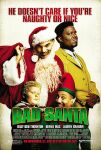
I just found out Terry Zwigoff directed Bad Santa, which is already at least a cult classic in my book
No website I could find, just this trailer from Miramax/Apple.
The review on IMDB is very negative, but I expect many people to hate this movie. And I suspect Miramax already just wishes it would go away.
But Thornton is perfect for the role, it's got John Ritter's last movie role, and it may be the best antidote to the oppressive Holiday Cheer since the Contortions' "Christmas with Satan."
Nah. Better. That song went on too long.
2:40 PM - [Link] - Comments ()
Jill Owens sure makes Julio Cortázar's 60s phenom Hopscotch (Rayuela) sound greatThe effect of all these disparate parts is to profoundly affect and alter the experience of reading, which was one of metafiction's original goals (the concept had not yet been named when Hopscotch was published). And what is amazing is that neither the structural play nor the "bohemian" characters' rhetoric is a gimmick; a sense of golden risk both illuminates and abstracts the action. Reading this book is a visceral, architectural experience. Although at times Cortázar delves into irony, the questions of truth and of relevance in fiction, of how to look at the absurdity of our own lives and find both despair and enlightenment, are absolutely sincere. I am reminded both of Cervantes, a few hundred years ago, and of the book artists of the last three or four decades, who have expanded the boundaries of what it means to write, to tell a story truly and well (or whether the real story might be found in silence).More on Cortázar.
2:17 AM - [Link] - Comments ()
Tuesday, November 25, 2003
New Ron Howard Western The Missing looks half decent, though I'm not a big fan of his work
I'm sure Cate will be worth watching as usual.
5:48 PM - [Link] - Comments ()
Dell to stop routing tech support calls to India for biz customers, but not home users
5:43 PM - [Link] - Comments ()
Benjamin Schwarz states his case for reading Nicholas Boyle's monumental Goethe: The Poet and the Age (volume 2 of three, each over 800 pages)
Certainly anyone with an interest in European culture of the late 18th century -- and German thought in particular -- wouldn't want to miss this.For years I shied away from Volume I (848 pages), and I read Volume II only when forced -- I sat on a book-prize jury that was considering it. Once finished, however, I couldn't wait to open the first volume. Even if you don't read this opus, you should know about it: Boyle's will remain one of the few towering works of biography and history of our time. Recognized as the sovereign intellect of his age -- he was a poet, a playwright, a theater director, a philosopher, a botanist, and an expert in politics, mining (!), and optics -- Goethe knew or corresponded with nearly every important European mind.All the same, if you're not up for a graduate course in Goethe and his time, this wouldn't be for you.
2:59 AM - [Link] - Comments ()
Monday, November 24, 2003
If you haven't already...
... meet Pieter Bruegel
You have to see the paintings at least screen size to begin to appreciate the detail.
2:50 AM - [Link] - Comments ()
There are links to the "open sound" labels mentioned in the Wired article I posted about a few days ago in the left column
The couple tracks I've d'ld have been pretty good.
If you know of any others, I'd like to know. Leave comments.
The mp3 labels like notype (on hiatus moving to electrocd I think) are still in the "Online Label, Mp3 Sources" section.
2:45 AM - [Link] - Comments ()
Wealth Bondage Stories
2:33 AM - [Link] - Comments ()
Sunday, November 23, 2003
A Taoist tale
The Water PumpThe water pump represents the workings of the karmic mechanism. Give it some water to work with, and it will return far more than you put in. This mechanism traces a great circle, an unbroken path that eventually comes back to its point of origin. The energy of this circulation gathers power as it moves along, so that when it finally returns, it is greatly amplified.
If the circle is a physical phenomenon, like the orbit of a planet or the cycle of seasons, then we can follow its path, observe its progress, and predict when the circle will be complete. We cannot do so with the karmic mechanism, because it is metaphysical in nature. Karma weaves its way in and out of the physical world with the greatest of ease, and when it goes into the non-physical realm, it disappears from view.
9:23 PM - [Link] - Comments ()
Saturday, November 22, 2003
New print of Sergio Leone's final Western Duck, You Sucker (A Fistful of Dynamite) premieres in NYC
Originally titled Once Upon a Time...the Revolution, this restoration features 20 minutes not shown in the US version.
Looking forward to the DVD. I remember getting a real kick out of the title and enjoying this as a teen, though it's pretty violent (for the time).
Coburn's devilish smile put to good use here.
1:25 AM - [Link] - Comments ()
Friday, November 21, 2003
Props for 21 Grams the new Alejandro Gonzalez Inarritu film
Reviewer says Sean Penn is even better in this than in Mystic River.
6:43 PM - [Link] - Comments ()
Speed-dating [Undernews]"I take a very practical approach to finding the right person," says Lee, 27, a Wharton business school graduate who likens the dating market to the stock market, tossing around terms like "liquidity" and "market value." In fact, if he had his druthers, those mini-dates would last a minute, just enough time to gauge someone's personality and whether "they have bad breath."I admit my practical Capricorn voice admires the efficiency.
But this is life out of balance with a vengeance.
12:38 AM - [Link] - Comments ()
Thursday, November 20, 2003
1 in 3 DVDs sold in UK is a boot [Arts Journal]Compared to videos, which are bulky and offer compromised quality, the new digital format is a bootlegger's delight. The discs are cheap, light and easy to transport, while copying is quick and quality does not degrade.Not sure I believe the terror funding claim.
It's not only the movie industry and cinemas that are at risk. A conference later this week in Dublin will hear how proceeds from intellectual property, such as counterfeit discs, are becoming the preferred method of funding for a number of terror groups.
4:02 PM - [Link] - Comments ()
Shirley Hazzard wins National Book Award
See post below.
3:57 PM - [Link] - Comments ()
Loca Records gets it [Arts Journal]Record labels have long been accused of stealing musicians' copyrights as soon as the ink is dry on the contract. Now, one small independent label in Great Britain is doing the opposite: It's giving the rights to the artists -- and anyone else who wants to use the music, too.
Loca Records wants to foster experimentation and freedom in music by building a stable of free music which can be shared, remixed and manipulated by anyone. Songs are not locked by digital rights management technology.
The music is available for free in MP3 format, but the company sells its CDs and vinyl in retail stores throughout Europe. Artists earn a percentage of any record sales; Loca Records makes its money through record sales, gigs it promotes and merchandise.
"You're free to copy it, give it to your friends and you can play it. If you're really interested, you can sample it and then re-release it," said David Berry, managing director of Loca Records and an artist himself, known as Meme. "Because at the end of the day, if you sample the work and create a fantastic remix, we think you're entitled to try and make some money from it."
3:46 PM - [Link] - Comments ()
Companies like BigChampagne makes big bucks data mining P2P nets for MusicMobsters [Arts Journal]
3:43 PM - [Link] - Comments ()

Stephen Lack: actor (in Scanners & Dead Ringers & Fatal Attraction), painter
5:00 AM - [Link] - Comments ()
Remember Crash?
Abasiophilia from Anxiety's Snowglobe
4:41 AM - [Link] - Comments ()
Low stock at the Herbarium
Though Aquilegia vulgaris seeds are in stock.
4:21 AM - [Link] - Comments ()
A good summary of airport luggage carousels, and the way they move
from the Dullmen.
4:16 AM - [Link] - Comments ()
bloodpurification.net
4:13 AM - [Link] - Comments ()

Peanuts, whisky and the "hidden barriers of class"With Americans, choice of words is more indicative of status than accent, although the New England boarding schools nurturing future upper-class boys have long fostered the Harvard, or Proper Bostonian, accent. In general, both the upper classes and the lower classes in America tend to be more forthright and matter-of-fact in calling a spade a spade (for example: organs of the body, sexual terms, exeretory functions, etc.) than people in between, members of the semi-upper and limited-success classes. In this respect, at 1east, we are reminded of Lord Melbourne's lament: "The higher and lower classes, there's some good in them, but the middle classes are all affectation and conceit and pretense and concealment."
Persons who feel secure in their high status can display their self- assurance by using unpretentious language. Old Bostonians are notably blunt (often to the point of rudeness) in their language. A well- established society matron of Dallas and Southampton gave the appropriate upper-class answer when asked about the "secrets" of her success in entertaining. She responded, according to *The New York Times*, with: "Why I just give them peanuts and whisky."
-- Vance Packard, The Status Seekers [from U Penn's The Literature & Culture of the American 1950s
3:52 AM - [Link] - Comments ()
Tuesday, November 18, 2003
Jonathan Raban's Waxwings: reviewIf, finally, most of that rather evaporates, it doesn't really matter. Raban has never quite cottoned on to plot. Here, as in Foreign Land, his first novel, you sense that he'd be glad to have one, but his heart's not in it. What he likes doing is blending genres, confounding categories. Fiction, non-fiction, travel, sociology. His first major book, Soft City, mixed journalism with drama, semiotics and literary criticism. Foreign Land itself began as another travel book, a false start at what, the following year, became Coasting. What he does, he says, is "what used to be called 'human geography': writing about place - about people's place in place, and their displacement in it". His views, ironic and humane, are always acute; always illuminating. His prose - agile, musky, particular - is a treasure.More details if you want them:A new novel by Jonathan Raban calculates the radius of the Internet bubble with the cool eye of an investor who can spot real value. Raban wrote a perceptive travel book in 1999 called Passage to Juneau, and he demonstrates that same sharp eye for the spirit of place again in this novel, his first in 18 years.
Waxwings, the first of three novels to be set in the Pacific Northwest, opens as the millennium closes. Wall Street is throwing ticker tape, but the real pixie dust is coming from the other coast. In cloudy Seattle, under the glorious sunlight of Microsoft, a thousand e-tulips bloom. Internet millionaires bid the city's real estate into the stratosphere. Mercedes crowd parking lots. Bathrooms are tiled with stone cut in Zambia.
Seattle in 1999 is a presatirized, virtual setting, and it's a testament to Raban's control that he can integrate personal and public catastrophes so deftly in this witty novel.
[...]
If tackling the giant social novels of Jonathan Franzen or Tom Wolfe makes you wish for a book that isn't quite so full, Waxwings may be just the corrective you're after. Raban captures this exuberant era with striking efficiency. He prods us to consider that we're living in a period that makes us all somehow foreigners, desperate for residency.
1:30 AM - [Link] - Comments ()
Susan Choi's American Woman: reviewBut American Woman isn't merely a fictional retelling of the Hearst case. Instead, it's that rarest of creations, a political novel that gives equal weight to its characters' inner and outer lives. The very conscience that prompted Jenny to extreme acts in protest of the Vietnam War begins to trouble her when it comes to her charges. The cadre are dangerous because they are, as she once was, naive enough to take rash action, "undisciplined, and terrified, and aflame with self-pity." They'd be funny, with their talk of carrying on their delusional "armed struggle" against the police and their solemn classification of newsmagazine articles as "intelligence," if they didn't tend to leave bodies in their wake. At 25, only a few years older than these fiery "warriors," Jenny feels vastly more experienced and far less certain.
Yet Jenny is also profoundly lonely, as only someone who has been living an entirely false life can be. With the fugitives, she can go by her real name among people who know her true history. And in Pauline, daughter of privilege, the cadre's great prize and yet never allowed to feel she entirely belongs, Jenny believes she's found someone to care for, and perhaps befriend. "We spend so much time hashing out the big forces that control our lives," one of Jenny's old comrades tells her, "but then sometimes I think you don't notice the personal things. All the messy emotional things. Those control our lives too."
[...]
This is a masterfully plotted book, but Jenny is driven by her own interior quandaries, not the imperatives of storytelling. American Woman feels organic, not constructed; it's a mature, fully realized work (though only Choi's second novel) that does everything a novel should do and seldom does in this day and age. It shows us the ways that character can be destiny, the big and the little forces that control our lives, the possibility that our worst choices will ultimately seem worth it, and the strange and circuitous paths by which a soul as lost as Jenny Shimada's can find its way home.
12:57 AM - [Link] - Comments ()
Monica Ali's Brick Lane: reviewAs her white neighbors become more openly xenophobic and her lover grows more radical, Nazneen finds herself in a world of passions ? political and personal ? as destructive as the repressed world she considers leaving behind. Her salvation comes not by doing what she's told or by choosing from the options of saint or sinner as outlined for her, but by daring to imagine a life outside those boundaries. Ali follows her progress so closely, so sympathetically that it's a moment of real delight when Nazneen finally cries out, "I will say what happens to me. I will be the one."
In the liberated West, of course, we've long known that women have other options: Madame Bovary can choke on poison, Edna Pontellier can walk into the sea, Thelma and Louise can drive off that cliff. How ironic that a young Muslim woman from Bangladesh should find a path that's neither nihilistic nor self-centered.
[...]
British critics have called her the next Zadie Smith, presumably because they're both young, nonwhite females who blasted onto the literary scene with Booker- nominated bestsellers about immigrant culture in London. But Ali displays none of Smith's pyrotechnics or her sprawling scope and scale. Biology aside, a better comparison would be with Anita Brookner, that non-young, blisteringly white matron of British fiction whose quiet incisive novels scrutinize the plight of lonely people.
12:39 AM - [Link] - Comments ()
Monday, November 17, 2003
You can never go home
On McSweeney's attempt to put the story back in short stories: reviewSome time around 1950, short fiction lost the plot. That is what Michael Chabon claims in his introduction to this special edition of McSweeney's. Until that somewhat arbitrary date, he argues, the term "short fiction" would conjure up all sorts of generic associations: the ghost story; the horror story; the detective story; the story of suspense, terror, fantasy or the macabre; the sea, adventure, spy, war or historical story; the romance story. "Stories", he asserts, "with plots." Since that time, we have endured the hegemony of "the contemporary, quotidian, plotless, moment-of-truth revelatory story".As Bryan Ferry once wrote, "Looking for love in a looking-glass world/Is pretty hard for you".
Chabon's mission, like that of some intrepid character from one of the tales here, is to "revive the lost genres of short fiction".
[...]
In an extreme way [Eggers's story] illustrates a tendency that characterizes much of this volume; Eggers is not "reviving" a lost genre in the way Chabon's introduction asserts, but registering our distance from those ripping yarns, from their historical and aesthetic forms.
[...]
I find something troubling about the lavishly anachronistic layout ("It has been designed to resemble a pulp magazine from the 1940s"), and in the incorporation of actual advertisements (and parodies of them; in McSweeney's universe it is ever more difficult to separate the two) that were once the staples of the pulps: ads for dubious correspondence courses, cheap clothing for outdoor workers, manual typewriters for hire at 10 cents a day, jobs as mail clerks. Ads which once appealed to -- and exploited -- the genuine aspirations and deprivations of their original readers have here become items of kitsch for the amusement of McSweeney's highly educated and knowing subscribers. This is one of the dangers of attempting to revive symbolically not just a predilection for plot but the historical context in which those plots were situated.
These stories once fired young and old imaginations, made mundane early 20th century life palatable. Now we're just looking for something to anchor us in a fairly stable "reality" for a little while.
2:57 AM - [Link] - Comments ()
Post at ctc on the new Didion
2:43 AM - [Link] - Comments ()
Sunday, November 16, 2003
Portuguese writer Fernando Pessoa's remarkable The Book of Disquiet appears to be a "memoir" of someone with Beckett's sensibility and self-imposed Dissociative Identity Disorder (yikes and wonderful): reviews here and hereThroughout, Pessoa is aware of the price he pays for his heteronomity. 'To create, I've destroyed myself... I'm the empty stage where various actors act out various plays.' He compares his soul to 'a secret orchestra' (shades of Baudelaire) whose instruments strum and bang inside him: 'I only know myself as the symphony.' At moments, suicidal despair, a 'self-nihilism', are close. 'Anything, even tedium', a finely ironising reservation, rather than 'this bluish, forlorn indefiniteness of everything!' Is there any city which cultivates sadness more lovingly than does Lisbon? Even the stars only 'feign light'.Appropriately, each review suggests the merits of a different translation; the Guardian reviewer likes the Richard Zenith which is available at the amazon link above, while Trisha Yost over at Powell's prefers Margaret Jull Costa's take. There are 3 English translations altogether.
Yet there are also epiphanies and passages of deep humour. In the 'forests of estrangements', Pessoa comes upon resplendent Oriental cities. Women are a chosen source of dreams but 'Don't ever touch them'. There are snapshots of clerical routine, of the vacant business of bureaucracy worthy of Melville's Bartleby. The sense of the comedy of the inanimate is acute: 'Over the pyjamas of my abandoned sleep...' The juxtapositions have a startling resonance: 'I'm suffering from a headache and the universe.' A sort of critical, self-mocking surrealism surfaces: 'To have touched the feet of Christ is no excuse for mistakes in punctuation.' Or that fragment of a sentence which may come close to encapsulating Pessoa's unique reckoning: '... intelligence, an errant fiction of the surface'.
3:10 AM - [Link] - Comments ()
Todd McEwen's Who Sleeps with Katz sounds like an engaging paean to a 20th century New York that may soon be a memoryAnd yet Who Sleeps With Katz (the title suggestive of what we do when faced with the loss of our closest friend) scrupulously avoids sentimentality by its edge of crankiness, by its conviction that New York City is a mystery whose secrets are open to anyone who is open to it. MacK and Izzy's elucidation of the character of various neighborhoods and streets, and the imperceptible yet quicksilver change that comes over the city as you pass from one to the other, is the antithesis of the false bonhomie you find in that tourist "classic," E.B. White's Here Is New York. The key to New York, in the view of both McEwen and his characters, is embracing its energy (what is often seen as its rudeness) rather than insulating yourself from it. Thus he writes of bars and corner delis and public buildings with some character in a nearly sacrosanct way, as refuges that are not disconnected from the world outside, each offering succor and expressing the grace the city can exude.I spent some time visiting New York from the mid 70s to 1990, and there was definitely something ineffable about it, maddening though it often was. I ended up being glad to leave it, partially because of its eurocentrism and teeth-grinding energy. But I'm glad I got to experience it.
2:46 AM - [Link] - Comments ()
Li Zhensheng's Red-Color News Soldier coolly and mercilessly documents the sadistic excesses of China's Cultural Revolution in unaltered, previously unseen photographs: review
2:31 AM - [Link] - Comments ()
Julie Gregory's Sickened : The Memoir of a Munchausen by Proxy Childhood is a very disturbing read I'm sure, but the author not only survived but triumphed and now is a psychiatrist and spokesperson for this kind of abuse: review...Gregory captures the sometimes bucolic pleasures as well as the sometimes horrific isolation that her rural family home provided. Her shock at discovering her mother is the perpetrator of her pain is heartbreaking as is her eventual resolutions of how to finally take control of her life. That Gregory survived her abuse and can continue to see her mother for all her beauty as well as her psychosis is remarkable. That she records it all in a hypnotic, compelling, and necessarily humane manner is testament to a wise and wonderful woman.
2:22 AM - [Link] - Comments ()
Saturday, November 15, 2003
A group of writers including ex-Python Terry Jones claim to know Who Murdered Chaucer?: A Medieval MysterySo the last thing Arundel wanted, Jones argues, was more descriptions of rip-off churchmen. And yet here's Chaucer, using his final masterwork to make everyone laugh at the pardoner who sells fake indulgences to poor congregations; at the summoner (a church court policeman, who probably is the pardoner's significant other) demanding bribes from defendants or will-be-defendants-if-they-don't-cough-up; at the monk spending all his time hunting; and at the friar, who should be penniless but is clearly a pampered, harp-strumming social climber. In fact, it's arguable that the entirety of the Tales - with their gentle mockery of the fake piety of pilgrimages - is an assault on the "church commercial" which relied so heavily on income from pilgrims.
4:06 AM - [Link] - Comments ()
Friday, November 14, 2003
"everyone was stoked when Jesus walked the earth"
Teen bible reprazents Jesus -- & makeup tips"Teens told us the Bible is too big, intimidating, and freaky," says Laurie Whaley, 28, co-creator and spokesperson for Revolve. Whaley, who comes from a long line of pastors, earned her MBA and then joined Thomas Nelson five years ago. After teens in focus groups told her they read magazines, she persuaded the publisher to mimic that style, recruiting women in their 20s who worked with Christian youth groups to write the sidebars.I think it's pretty freaky too, but I have all the makeup tips I need.
10:13 AM - [Link] - Comments ()
If you're having spam problems, Norton's new program looks like a good solution
1:24 AM - [Link] - Comments ()
Much good stuff at Ubuweb if you're into artaudio
Like an anthology of rare Fluxus "soundworks and interviews" and the notorious Aspen multimedia magazine of the 60s "remediated for the web".
And I guess this is where Tortoise got that long funny title for the track on their TNT album.
scanner fans go here.
12:35 AM - [Link] - Comments ()
Wednesday, November 12, 2003
I've read mostly widespread praise for Jonathan Lethem's The Fortress of Solitude, and I liked Motherless Brooklyn & Gun, With Occasional Music, so I'm sure I'll give it a spinThe Fortress of Solitude knows no literal, actual time, even though the first part, called "Underberg," ranges more or less chronologically over Dylan Ebdus's childhood, from his mother's disappearance and his father's awkward efforts to make up for her absence to the "yoking" and bullying Dylan endures on the street; his academic success; the arrival of Mingus Rude's shiftless, bible-thumping grandfather; a languid summer in Vermont; the rise of disco, punk, rap, crack, and the cataclysmic turn of events that puts an end to childhood for Dylan and Mingus both. The book is a Bildungsroman in the exact sense, the story of Dylan's self-development in the context of place and time. It's also a comedy, a history and a fantasy, where the strange and supernatural mix freely with the solid and austere, as they do in life, in memory, in everyone's autobiography.It's a big book the reader will either love or drop, like any big book. A lot of people love this one, though.
3:07 AM - [Link] - Comments ()
"the need for love to counteract the vile wind of history that breeds loss and dislocation"
Shirley Hazzard's first book in 23 years, The Great Fire looks very relevant to our time of trembling realities, though it takes place after WWII in Japan: reviewThe war, in 1947, has been over for two years, but Ms. Hazzard writes its very absence into a moody presence.The italicized quote above is from the Publishers Weekly review.
This negative presence makes itself felt on a number of levels. Most explicitly, death, loss and suffering are subjects that haunt the dialogue and meditations of most of the more sympathetic characters. At the level of the prose, too, we are made to feel the recentness of great violence: Sentences drift out of and into nowhere, unstarted or unfinished; pronouns are excised to create a kind of stunted syntax, as though the war had brutalized language. And, too, the characters themselves enter the novel not so much introduced as floated into their broken-down atmosphere, as though it were not relevance to the story but rather the shock of collective experience that had assembled them.
2:47 AM - [Link] - Comments ()
Tuesday, November 11, 2003
More on Llactapata & Machu Picchu [newsmakingnews]
4:02 PM - [Link] - Comments ()
For fans of the seminal German group Can: a 2-DVD/CD box set is available, including a concert film from '72, a short film by Brian Eno, much more [Nerve Net list]
3:36 PM - [Link] - Comments ()
Sunday, November 09, 2003
Interesting review of Stefan Kanfer's Ball of Fire: The Tumultuous Life and Comic Art of Lucille Ball[Arnaz] wasn't just Cuban, dark, unintelligible, but all rhythm; he was also sexy. And this is the guy who somehow gets to be the pillar of society, the ideal family man, as well as the adoring hubby who keeps his wife's madcap ways out of electroshock treatment? Remember, this was 1951, when Lena Horne sequences got cut out of MGM films when they played the country. Put it another way: how likely do you think it would be today to have a hit sitcom in which Ving Rhames plays a successful show-business businessman and Lisa Kudrow is his half-crazy homemaker wife who can't control her dream of the limelight? I mean a mixed-race couple, married, in prime time?Some good insights into the I Love Lucy phenomenon, and the weird, jangly marriage of reality and TV the show was.
[...]
The real Lucy was not the easiest company. There was a grating mixture of harsh realism and self-pity. It's what made her insist, "I am not funny. My writers were funny. My direction was funny. The situations were funny. But I am not funny. I am not funny. What I am is brave." That sort of line can turn oppressive after a while: courage is always best noted by others. Lucy had a way of seeing everything that ever happened as a burden made especially for her. It's not the least sign of the astuteness behind I Love Lucy that such scolding was kept out of the show. Not that anything ever dulled the pain or the paranoia in her eyes: the very cover of Kanfer's book, which shows Lucy in a moment of almost orgasmic, comic horror, is a valuable record of how close the eye-popping double take at domestic disaster can come to terror or madness.
10:59 PM - [Link] - Comments ()
Corporate logos as alphabet
The capitalis pirata font [Undernews]
12:47 AM - [Link] - Comments ()
Saturday, November 08, 2003
Salman Rushdie interviews Terry Gilliam [Epitonic]At the heart of Brazil is a man who has a privileged background, who is educated, who isn't taking responsibility for the world he is a part of. He is a cog in it, thinks he can do nothing better. To me, the heart of Brazil is responsibility, is involvement -- you can't just let the world go on doing what it's doing without getting involved. And of course what he does is he falls in love so he falls vulnerable, and his whole world starts falling apart. Never fall in love.The (physical) magazine this comes from, The Believer, is a part of the McSweeney's juggernaut, which I have had little contact with. Though thousands sing its praise.
It looks like a worthy effort, but even at the "discount" rate of $55 a year they're offering now, I can afford about 2 issues right now.
Anyway, the home page is here.
They have some articles online though, like the above interview and this long piece on The Saragossa Manuscript and its descendants (Pynchon, The Illuminatus Trilogy, and so on) and this intriguing disposition on Our Rediscovery of Melodrama (Far From Heaven) and the reflective superiority of Babette's Feast (starring the usually aristocratic Stéphane Audran in what some say is her best role; she's been in 104 movies!, including the one I know her best from, Buñuel's The Discreet Charm of the Bourgeoisie, and her ex-husband Claude Chabrol's film La Femme Infidèle, which I just saw -- Unfaithful is a remake).
Babette's Feast (based on a novel by Isak Dinesen) is a great film by my lights as well (it's in both video formats). It actually cultivates gratitude in the viewer -- a rather extraordinary thing.
11:55 PM - [Link] - Comments ()
Media Gangsters offer prizes to students who oppose file sharing
MPAA & charity join forces to convince schoolkids file sharing is "just plain wrong" [Undernews]The MPAA has teamed up with charity organization Junior Achievement to begin teaching students about the evils of file-sharing and copyright laws. The program, called What's the Diff? A Guide to Digital Citizenship, started last week and will be held for students in grades 5-9 over the next two years. Among things, students will engage in discussions why file-sharing is wrong and role-playing as various people involved in entertainment such as producers, directors, actors, and carpenters (the one we've all grown to weep for ever since the MPAA started showing ads before movies against file-sharing).
10:58 PM - [Link] - Comments ()
Mark Twain in His Times [Refdesk]This interpretive archive, drawn largely from the resources of the Barrett Collection, focuses on how "Mark Twain" and his works were created and defined, marketed and performed, reviewed and appreciated.
12:33 PM - [Link] - Comments ()
Llactapata
City ruins found near Machu PicchuThe site was first mentioned by explorer Hiram Bingham, the discoverer of Machu Picchu, in 1912. But he was very vague about its location, and the ruins have lain undisturbed ever since.
After locating the city from the air, the expedition used machetes to hack through the jungle to reach it, 9,000 feet up the side of a mountain.
They found stone buildings including a solar temple and houses covering several square miles in the same alignment with the Pleiades star cluster and the June solstice sunrise as Machu Picchu, which was a sacred center.
12:31 PM - [Link] - Comments ()
Thursday, November 06, 2003
Happily, Criterion is re-releasing Tati's Mon Oncle & M. Hulot's Holiday in January
Thought I was going to have to pay extortianate eBay prices for Mon Oncle, one of my favorite films and formerly difficult to find on VHS -- not to mention the prints sucked major.
Playtime & Jour de Fête will follow later in the year.
Apparently they had to re-negotiate the rights.
More on this unique filmmaker here and here.
11:02 PM - [Link] - Comments ()
Underground restaurants thriving [Undernews]Mamasan's is not, however, an anomaly. Restaurants of dubious legality, where food is cooked in apartments and backyards, abound across the United States. These underground restaurants range from upscale to gritty, and are born from youthful idealism, ethnic tradition or economic necessity. They lack certification from any government agency and are, strictly speaking, against the law. You dine in them at your own risk. If you can find them.
Over the last four years, Lynette said, more than a thousand customers have come through her doors to eat pungent Chamorran dishes from Guam, where she was raised in the local Chamorro culture. She cooks them with her 61-year-old mother, the Mamasan of the restaurant's name.
"I've worked at restaurants for years, and dealing with the public is a beast," Lynette said. "You don't get to edit who comes into your space, and it becomes a very sterile exchange of goods. I like knowing who is coming, and whether they understand what I'm doing."
Lynette describes her restaurant as a kind of "party" -- albeit one that comes with a bill -- and many underground restaurateurs harbor similar visions. Most chefs, after all, cook because they want to feed people great meals, but in the end, the compliments of satisfied diners are not always compensation for the headaches of running a business.
Expect more alternatives like this to pop up, as people get fed up with mediated or branded services.
12:24 AM - [Link] - Comments ()
Monday, November 03, 2003
Fidel Castro reviews Marquez's memoirs
Not that I'm a big fan of Castro particularly, but he sounds fairly intelligent.
And of course imagining the current uh leader of America reviewing any book is too mind-boggling and depressing to contemplate.
1:33 AM - [Link] - Comments ()
Sunday, November 02, 2003
The greatest composer of the last quarter of the 20th century?
Kyle Gann on Morton FeldmanHis cross-cultural appeal comes from the fact that he created a postmodern sense of form - long, slow musical continua played in uniformly quiet dynamics - while holding onto the basic modernist pitch vocabulary of dissonant intervals. In other words, he deftly sidestepped the crisis of ever-increasing modernist complexity without giving in to what was seen as the vapid anti-intellectualism of minimalist consonance and tonality. Even more than that, by writing in his late years works of a continuous 90 minutes, three hours, four hours, even six hours in length, he reclaimed for the disspirited modern composer a sustainable measure of magnificent ambition, a pride in occupying an audience?s time. Quietly but vehemently he asserted for all of us that new music is worth sitting still for, practicalities be damned. In addition to which, as his friend John Cage said, his music is "almost too beautiful."
12:57 AM - [Link] - Comments ()

The Ten Most Wanted Works of Art [Arts Journal]Bird in Space Constantin Brancusi
The Cardplayers Paul Cézanne
The Time of the Fire Willem de Kooning
L.H.O.O.Q. Marcel Duchamp
Bathers Paul Gauguin
Diver Jasper Johns
The Muses Brice Marden
Lucifer Jackson Pollock
Jan Six Rembrandt van Rijn
Portrait of Dr. Gachet Vincent van Gogh
12:44 AM - [Link] - Comments ()
Saturday, November 01, 2003
Official Phil Dick site launch to coincide with the release of John Woo's film of the 1952 short story "Paycheck", starring Benlo [s*T*a*R*e]
...about a scientist in the future whose memory is erased after he completing a job working on a top-secret project. Using a bag of clues he left for himself, he must piece together his past while being hunted by evil forces.
Also Erich von Däniken opens a "Mysteries of the Universe" theme park in Switzerland.
2:52 AM - [Link] - Comments ()
Immanuel Velikovsky Archive [s*T*a*R*e]Following the rabbinical sources which declare that the Deluge was caused by two comets ejected by the planet Khima, and our interpretation of the planet Khima as Saturn, we begin to understand the astrological texts, such as certain passages in the Tetrabiblos of Ptolemy, which attribute to the planet Saturn floods and all catastrophes caused by high water.
2:41 AM - [Link] - Comments ()
Cecily of Formica on the threat of hypertextThis kind of intertextuality has only been hinted at in the scholarly practice of foot- and endnotes, but unlike these academic conventions, hypertext expands on the practice by providing the reader with an immediate opportunity to investigate other references. Hypertext explodes the notion of 'book as solitary object'; all hypertexts are related, each hypertext exists only in relation to other hypertexts, and no one relationship between documents supercedes the other in importance.
2:28 AM - [Link] - Comments ()
Guardian's Top 40 US bands: 40-21
2:10 AM - [Link] - Comments ()
Guardian's Top 20 Brit bands
2:00 AM - [Link] - Comments ()

and s-integrator
@me
 Rarely has reality needed so much to be imagined.
--Chris Marker
Rarely has reality needed so much to be imagined.
--Chris Marker